
Build Safer, Stronger Outdoor Structures with Engineered Fasteners

Updated: Apr 8
By Brett Katsma

Outdoor structures have become one of the most sought-after upgrades in residential construction, as a way to economically expand living space and enjoy the outdoors. Whether it's a new deck, pergola or shed, homeowners are investing more in upgrading their backyards. For builders, remodelers and contractors, this means that every element—from lumber selection to fasteners—needs to provide durability, strength and long-term performance.
Advancements in fasteners have been driven by changes to thread designs, user-experience features like torque reduction coatings, or even the development of application-specific fasteners, all which help differentiate engineered fasteners from typical commodity ones. Engineered fasteners offer a variety of benefits to reduce labor, improve efficiency and deliver stronger connections.
Designed not only to eliminate time-consuming pre-drilling, but able also to handle the power and torque that today’s impact drivers are generating without recesses rounding out. Not all structural engineered fasteners are recommended to be used with impact drivers. Engineered fasteners are tested and designed to offer the highest withdrawal and pull-through values and deliver superior clamping force, all to save labor and ensure reliable connections.

Anything built outdoors will face regular exposure to moisture, rot, insects, and sun/UV rays, so every material, including the fasteners, must be able to stand up to environmental wear. In lumber applications, a corroded fastener can even deteriorate the wood by allowing moisture infiltration. For building in harsh environments, engineered fasteners resist corrosion thanks to advanced coatings and materials that meet or exceed the minimum acceptable criteria for being call an “exterior coating.”
In addition to coatings, premium engineered fasteners offer the option of creating an attractive contrast and on-trend look with black fasteners. This look started with the modern industrial and farmhouse style in building and architecture, and extends to the fastener category. Black fasteners provide a more polished, modern appearance for a more finished, upscale look.
Deck Substructures
Whether it’s new construction, repair or replacement, deck building offers steady demand for pros. But improper construction or outdated fastening methods can result in hidden failure points. According to the North American Deck and Railing Association (NADRA), there are more than 60 million decks in the U.S. today, but over 30 million are past their useful life or in need of repair. Properly installed engineered fasteners help maintain safety and prevent failures, call-backs and bad reviews. NADRA also provides a Deck Safety Checklist, a helpful tool for both professionals and homeowners to evaluate existing decks and identify potential safety concerns.
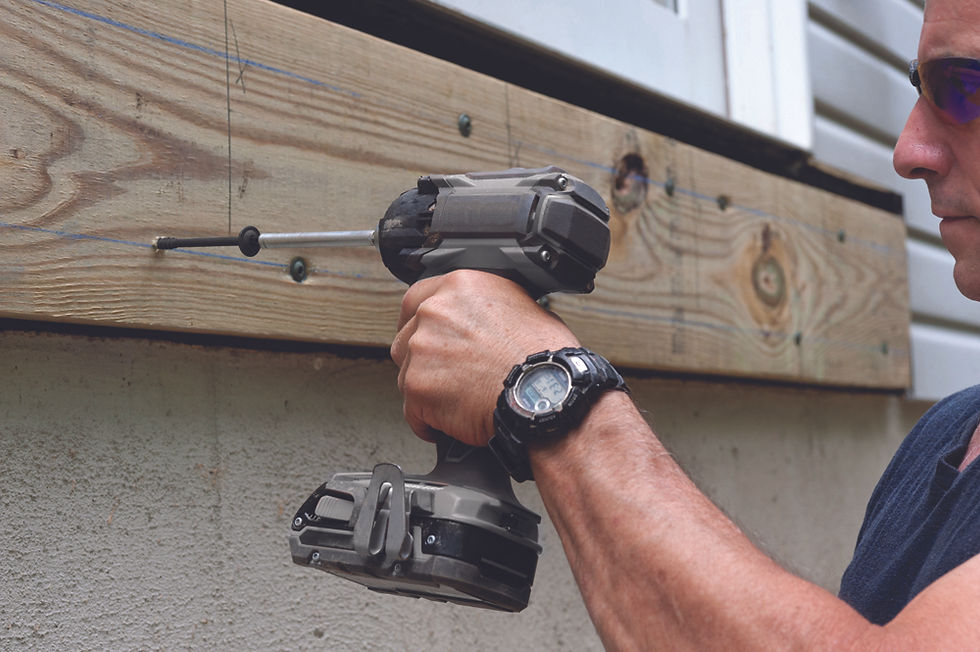
The ledger connection is one of the most important structural details in a deck build, essential to connecting the deck to the house. When inferior fasteners corrode, the results may not be immediately visible, but over time, they can compromise the stability of the ledger-to-house connection. Choosing structural wood-to-wood fasteners with corrosion-resistant coatings helps ensure critical connections hold firm through seasons of exposure to weather, movement and load. Engineered fasteners are often set apart from commodity fasteners with deck-ledger specific reports to support proper spacing that help builders and contractors meet the code requirements for the critical connection.
In many cases, using a stronger, engineered screw for ledgers also means fewer fasteners are required overall, resulting in faster installation and reduced labor without compromising code compliance or durability.
Sheds for Storage or Outdoor Living
Sheds today are more than storage, becoming everything from home offices to gyms to livable accessory dwelling units (ADU). And, she- or he-sheds have also become more popular. These trends offer contractors another valuable opportunity to meet the demand for covered outdoor living spaces. They also allow homeowners to expand their usable living space without building an addition on their home. Just like the home itself, these spaces need to ensure safe building connections, something premium fasteners can provide.

Any load-bearing assemblies, such as truss and multi-ply beams, demand engineered fasteners. Always look for fasteners with technical evaluation reports (TERs) that provide spacing guidance and visuals along with documented strength and code compliance for the best possible results. Installing large structural sawn lumber or LVL can be difficult, so having
no predrilling requirements, even on large-diameter screws, along with quick driving thread designs will ease the installation effort.
Lumber isn’t always straight, which can cause headaches during the finishing stages of the project. Engineered fasteners will have the strength to pull stubborn boards tight and clamp together bowed or twisted boards, helping eliminate gaps or future movement.

In truss-to-top plate applications, certain engineered fasteners can even replace traditional hurricane ties, stream-lining installation while offering greater resistance to uplift. Unlike nails, which may misfire or fail to seat correctly, these screws help ensure consistency and quality throughout the structure. They're also easier to remove to make any adjustments during the framing portion of the project.
For visible exterior work, engineered screws can contribute to a more refined final look with
a multitude of head styles in trending colors. The no-split tips help minimize splintering
or movement over trim, improving the aesthetic finish on trim and framing details, which matters more than ever to discerning homeowners.
Pergolas and Gazebos
Pergolas, gazebos and similar open-air structures require the same attention to structural integrity as their enclosed counterparts. Although they may not have fully enclosed walls,
open-air structures still demand solid, long-lasting connections around the trusses, rafters, beams and roofing. The open design of pergolas and gazebos leaves joints more susceptible to wind uplift.
Installing professional-grade structural screws helps keep critical connections secure, especially where structural components intersect, like the beam-to-rafter or post-to-footing connections. The fasteners need to resist movement moving through these critical connections. Engineered fasteners with high performance values, found in their third-party reports, could eliminate the need for costly additional reinforcement. For installers, it means faster assembly that meets code; for homeowners, it means safer longer-lasting outdoor living spaces.

With more homeowners investing in backyard upgrades, using better fasteners helps ensure you deliver projects that stand up to weather and daily use.
Your builds are only as strong as their weakest connection, and that connection often comes down to the fasteners you choose. Using cheap fasteners might save pennies today but could cost thousands in repairs or reputational damage down the line. From premature corrosion to structural failure, low-quality fasteners can quietly undermine the quality of your project. On the other hand, premium screws reduce installation time, hold more securely, and provide lasting resistance to the elements.
By specifying and using high-performance fasteners, you’re not just building structures, you’re building safer homes, better experiences and long-term peace of mind.
--
About the author: Brett Katsma has a project engineering background and has been a Product Manager with SPAX for four years.


Comments