
How Weather Cycles Put Foundations at Risk

Alec Breckenridge is General Manager of Ox Foundation Solutions and has spent 11 years in the foundation and crawl space industry. During that time, he has seen a wide range of foundation, moisture and crawl space problems, including many that began as relatively minor warning signs before developing into larger structural concerns.
In this Q&A interview, Breckenridge offers his expert insight into house foundations for the readers of Home Improvement & Repairs.
Why do cycles of heavy rain and dry weather create conditions for foundation movement?
One of the biggest factors affecting a home's foundation is something homeowners cannot see: the soil underneath and around it. As moisture levels change, certain soils expand and contract, putting stress on the foundation.
During periods of heavy rain, the soil expands and swells. It can exert pressure on the foundation and potentially push portions of it upward, a process known as heaving. When conditions become dry, the opposite can happen. Soil loses moisture, contracts and can pull away from the foundation, sometimes leaving voids beneath it. Without consistent support from the soil, portions of the foundation can settle or sink.
A home may go through wet conditions, then an extended dry period, followed by another round of significant rainfall. The real concern lies in repeated expansion and contraction contributing to ongoing movement over time.
It is important to pay attention to how water moves around the property and watch for signs that the home may be shifting no matter where homeowners may live.

Crawl space encapsulation involves sealing and managing moisture levels in your crawl space, helping keep it dry and clean.
Why do many homeowners prioritize waterproofing but overlook the underlying foundation problems that often accompany it?
Water problems tend to get a homeowner's attention quickly because they are visible. You walk into a basement and see standing water, notice a musty smell or discover mold, and you immediately know something is wrong. In my experience, those are often the symptoms that prompt homeowners to seek help.
The challenge is that water intrusion and foundation movement can be connected. A crack that allows water into a basement, for example, may also be a sign of movement. Poor drainage around a home can contribute to both moisture intrusion and changing soil conditions around the foundation.
That is why homeowners need to look beyond the immediate symptoms. Waterproofing can be an important part of protecting a home, but homeowners should also understand why the water is getting in and whether there are signs of a broader foundation or drainage issue.
Homeowners should pay attention to cracks that are widening, uneven floors, changes around doors and windows, or recurring water intrusion to understand the source of the problem rather than only addressing what is most visible.
How can delaying repairs increase both the scope and cost of damage?
Foundation problems generally do not get better with time. A small crack may seem easy to ignore, particularly if it is not causing immediate disruption. But if the home continues to settle or shift, that crack can widen. Minor water intrusion can also become more serious as moisture continues entering the home. Over time, that can contribute to mold growth, wood rot and interior damage. Unresolved drainage and foundation issues can also allow soil movement to continue, increasing structural instability.
That can change both the scope and cost of the eventual repair. Instead of addressing one localized issue, a homeowner may ultimately be dealing with multiple problems involving the foundation, drainage, crawl space or interior of the home.
Homeowners do not need to assume that every crack means they have a major structural problem. They should, however, take changes seriously. If a crack is growing, water keeps returning or other signs of movement begin appearing, evaluating the problem early can provide a clearer understanding of what is happening before additional damage occurs.
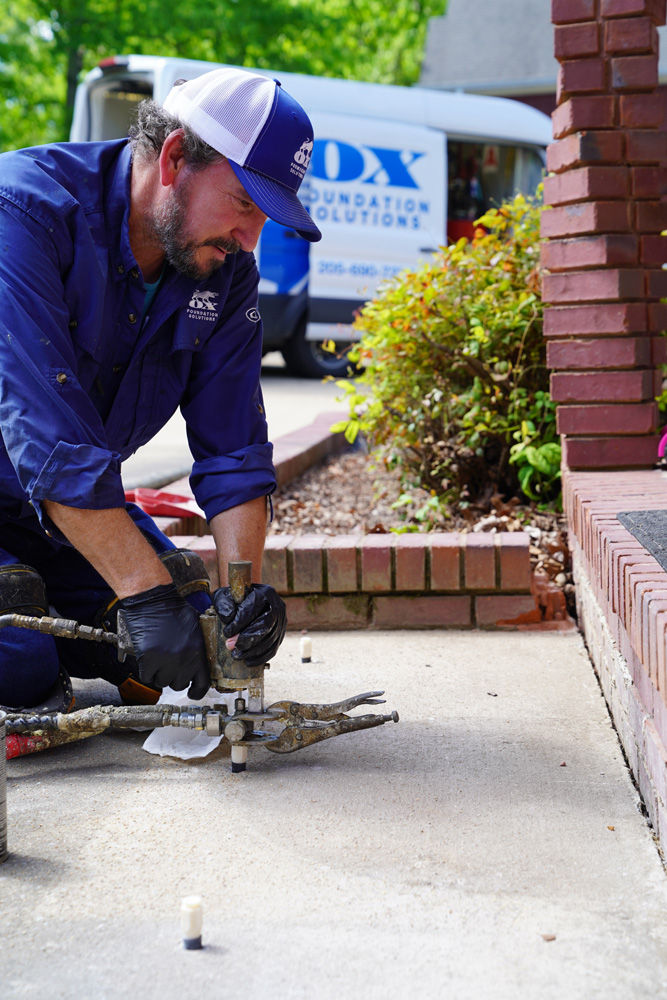
Tearing out and replacing damaged concrete slabs likely isn’t necessary. Using a proprietary polyurethane foam injection, the repair technicians at Ox can lift concrete slabs to the optimal level and repair issues much faster and more affordably.
How do flexible financing options help more families address structural repairs before they become emergencies?
Foundation repairs are not always expenses homeowners anticipate. Unlike a planned renovation, a structural or waterproofing problem can appear unexpectedly and may need to be addressed before a family has had time to budget for it.
That flexibility matters because delaying a repair solely because of the upfront cost can allow the underlying problem to continue developing. When homeowners have more ways to manage the expense, they may be better positioned to address a problem while it is still manageable rather than waiting until it becomes an emergency.
The larger point is that homeowners should understand both the repair itself and the payment options available to them. Structural work can be a significant investment, but waiting can sometimes turn one repair into several.
What challenges do homeowners face from changing weather conditions, and what practical steps can they take to protect their homes?
Across the country, the exact foundation risks vary based on soil type, climate, drainage and home construction. But homeowners in areas that experience heavy rainfall, high humidity and periods of drought should pay particular attention to the interaction between moisture and the soil surrounding their homes.
Heavy storms can overwhelm drainage systems and allow water to collect near the foundation, increasing hydrostatic pressure against basement or crawl space walls. Dry periods can then cause soil to contract. Repeated cycles of excessive moisture and dry conditions can create an ongoing pattern of soil expansion and contraction. Humidity can create another layer of concern by contributing to mold, wood rot and crawl space deterioration.
There are several practical steps homeowners can take:
· Keep gutters and downspouts clear and direct water roughly 5 to 10 feet away from the foundation.
· Make sure the ground surrounding the house slopes away from the structure so water does not collect alongside it.
· Depending on the property, drainage solutions such as French drains, sump pumps or crawl space encapsulation may also help manage moisture.
Most importantly, address smaller foundation or waterproofing concerns before they have an opportunity to become larger structural problems.

Too much moisture in your home encourages the growth of pathogens and pests as well as indoor pollutants including mold, dust, bacteria, and pollen. It is important to control moisture to improve your indoor air quality. For doing that, you need a good dehumidifier.
----
For more information
Ox Foundation Solutions helps homeowners address a range of foundation and moisture-related problems, including cracked foundations, wet or moldy crawl spaces, leaking basements and uneven concrete. Learn more at https://birmingham.oxfoundations.com.


Comments