
Home Wildfire Protection: Zones of Defensible Space

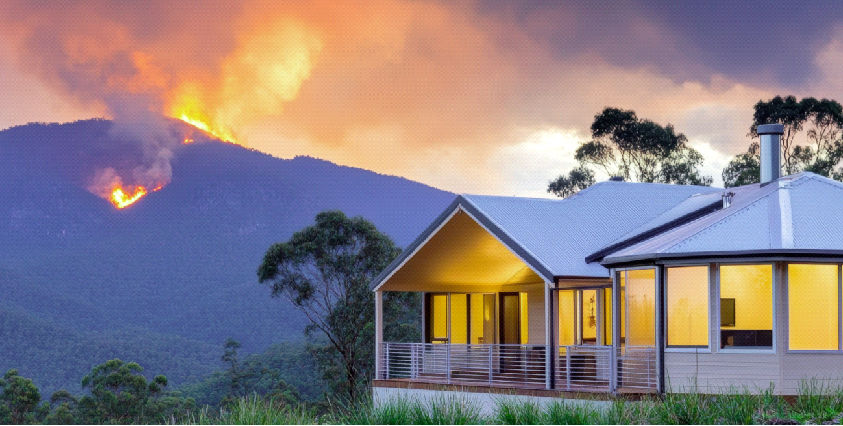
On August 19, the State of California adopted new rules to mitigate wildfire damage, stressing the importance of “defensible space” as a practical strategy to protect your home.
The “defensible space” is divided into zones that radiate outward from your home. Zone requirements vary by state, but the same core idea holds across any fire-prone area: Clear the landscaping aggressively near the house.
According to Cal Fire, defensible space is crucial for a home’s wildfire safety. It’s the buffer zone you create between your property and the surrounding wildland area. This space is key to slowing or stopping wildfire spread and protecting your home from embers, flames, or heat. It also gives firefighters a safer area to defend your property.
Cal Fire breaks defensible space into 3 zones:
Zone 0 (0 to 5 feet): Ember-Resistant Zone
Replace woody plants and mulch with rock, gravel, pavers, or concrete. Clear leaves and debris from the roof, gutters, decks, and under stairs. Trim branches within 10 feet of chimneys. Replace flammable fencing with noncombustible materials. Relocate firewood, garbage bins, and vehicles to Zone 1 or 2.
A 2025 study in Nature Communications estimates that when homeowners harden their house (by using fire-resistant materials like concrete) and clear flammable material within 5 feet of their house, twice as many homes survive a wildfire: 40 percent versus 20 percent.
California’s new rules for Zone 0 stipulate that lawns, flowers, and nonwoody plants under 18 inches can stay in the first 5 feet, but not directly under the roofline.
Trees can stay if branches are trimmed 5 feet away from any structure, but mulch, wood chips, dead leaves, and firewood cannot. (New construction must comply immediately; existing homes have until 2029 at the earliest.)

Zone 1 (5 to 30 feet): Lean, Clean, and Green
Remove dead plants, dry grass, weeds, leaves, and needles year-round. Space plants, trees, and combustibles (wood piles, patio furniture, play sets) so nothing forms a continuous line of fuel. Keep tree branches at least 10 feet from other trees.
Zone 2 (30 to 100 feet): Reduced Fuel Zone
Cut annual grasses to a height of 4 inches or less to reduce fuel. Remove debris (fallen leaves, needles, twigs, bark) or keep the layer under 3 inches deep. Space tree canopies 10 feet apart, wider on slopes. Break the fuel ladder between grass, shrubs, and low branches. Clear 10 feet around wood piles and propane tanks.
Note that California likely has the most restrictive guidance for home fire prevention in the United States, but these strategies demonstrate a cautious model for implementing protective measures around any home in an environment prone to fire exposure.
--
Source: www.lawnstarter.com and www.fire.ca.gov.


Comments